POCKET BOOK SERIES
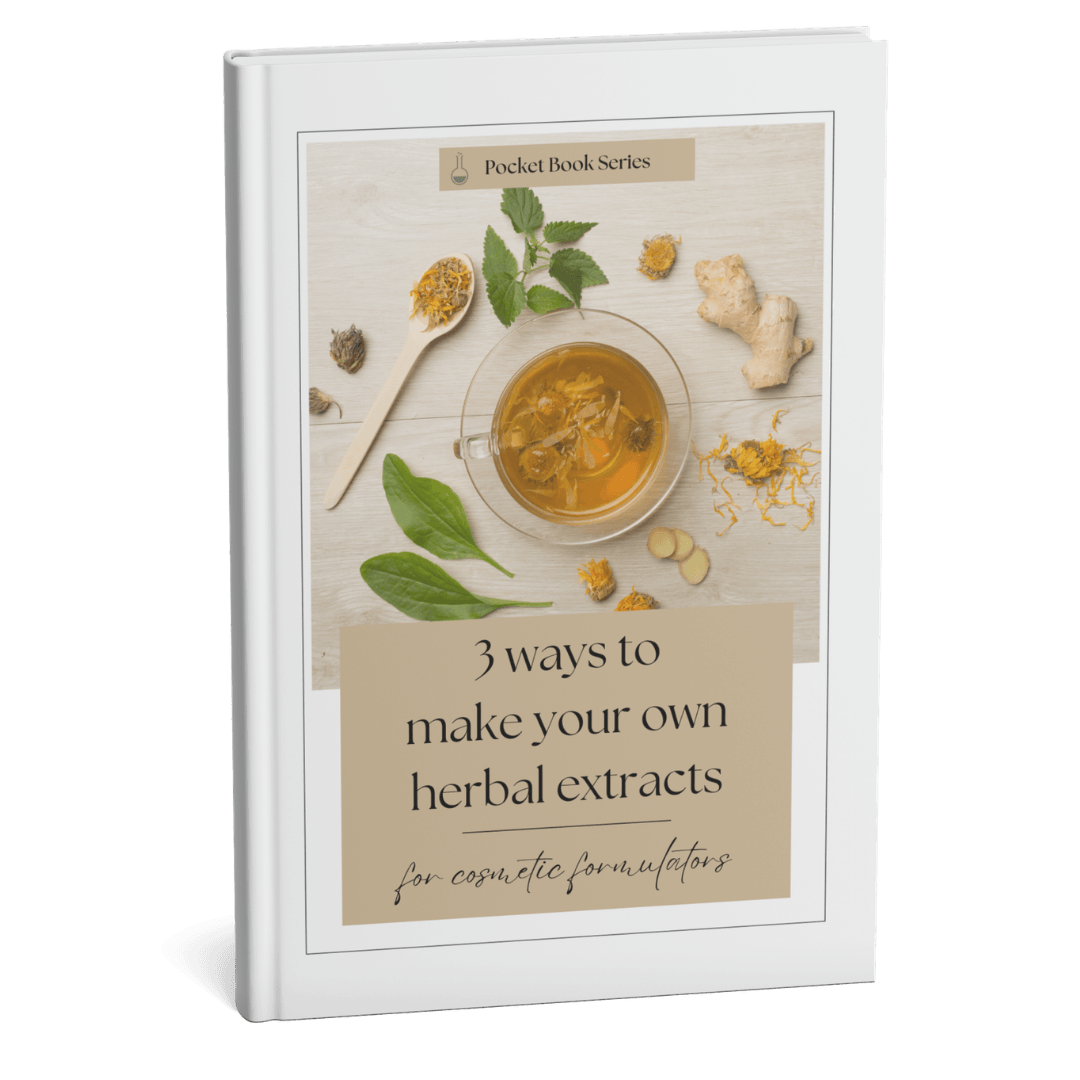
3 Ways to Make Your Own Herbal Extracts for Cosmetic Formulators
A practical pocket book covering solvent science, three step-by-step extraction methods, and a plant-to-solvent pairing reference. 18 pages, instant download.

Enhance yout design skills
The ebook is packed with insights and techniques to help you elevate your design skills
Create stunning designs
Create visually stunning designs that capture your audience's attention and leave a lasting impression
Save time and money
This ebook provides you with a wealth of design knowledge, allowing you to complete your projects quickly and efficiently
About the book
Most formulators start buying herbal extracts from suppliers without really thinking about it.
They're convenient, they come with an INCI name, and they slot into a formula easily enough.
But at some point, you start wondering what's actually in them, how they were made, and whether you could do a better job yourself.
You probably can. And it's more straightforward than you'd think.
This pocket book covers three extraction methods you can use in your own lab or kitchen: water infusions and decoctions, oil macerations, and glycerites. Each one is walked through step by step, with ratios, tools, timing, and notes on preservation, so you're not left filling in the gaps yourself.
The first chapter explains the science behind solvent selection, because the solvent you choose determines which plant constituents you actually extract. Alkaloids behave differently from tannins, flavonoids dissolve differently from resins, and if you don't understand that relationship, you'll end up with a nice-smelling liquid that isn't doing much in your formula.
Who is this book for?
The home formulator
"I've been buying chamomile extract from my supplier for two years, and I've no idea how it was made. I want to start creating my own, so I know exactly what's going into my products."

The small brand builder
"Commercial extracts are expensive, and I can't always verify the quality. If I could make my own calendula or rosemary extracts, I'd have more control over my ingredients and my costs."

The curious student
"I understand basic formulation, but I've never tried making my own extracts. I want a clear guide that explains the science without overcomplicating it."
BOOK CHAPTERS
What's inside?
Three chapters, 18 pages. Everything you need to start making your own herbal extracts, with enough science to understand why each method works.
Solvents and plant chemistry
How water, oil, glycerine, and alcohol work as extraction solvents, and how seven types of plant constituents (alkaloids, tannins, flavonoids, resins, saponins, starches, and glycosides) respond to each one.

Extraction methods
Step-by-step checklists for four processes: hot water infusions, decoctions, oil macerations, and glycerites. Includes ratios, timing, preservation notes, and guidance on which herbs suit which method.

Plant and solvent pairing
A quick reference guide matching common botanicals to their most effective extraction method, so you can plan your next extract with confidence. Covers plants from chamomile and lavender to marshmallow root and liquorice root.
ABOUT ME
Hi, I'm Timi!
I'm a cosmetic formulation educator and the founder of Formulator Hub, where I've been teaching natural cosmetic formulation since 2015. I'm a cosmetic chemist and teacher, and I also work in R&D for a luxury brand, so I split my time between teaching and product development in a manufacturing setting.
I wrote this pocket book because making your own herbal extracts is one of the most useful skills a formulator can pick up, and it doesn't need to be complicated. I wanted to put the essentials in one place: the solvent science, the methods, and a practical reference you can use at the bench.

PRICING
Buy the E-book

Buy the book
Instant download
$29 $19
PDF format
18 pages, 3 chapters
Step-by-step checklists
Plant-to-solvent pairing guide
FAQ
Got questions?
Cosmetic formulators at any level who want to start making their own herbal extracts. It assumes you know basic formulation terminology (water phase, lipid phase, preservatives), but no prior extraction experience is needed.
Three: water-based extraction (hot infusions and decoctions), oil maceration, and glycerine extraction (glycerites). It also explains why alcohol-based tinctures exist but doesn't include them, as they're more complex and less commonly used in cosmetics.
The book includes a plant-to-solvent pairing reference covering common botanicals like calendula, chamomile, nettle, burdock, lavender, marshmallow root, and more. It also explains seven categories of plant constituents, so you can research new herbs and determine the best extraction method yourself.
Nothing you wouldn't already have in a basic formulation setup: glass beakers, scales, a funnel, cheesecloth or coffee filters, and a glass rod. The book includes a full tool list.
No, it's a pocket book. 18 pages of focused, practical content designed to get you started and give you a reliable reference. If you want deeper training on botanicals in cosmetic formulation, have a look at the Pocket Book of 50 Botanicals or the Pro Formulator Path.
PDF, instant download after purchase.
Formulator Hub