

Formulate a blue facial cleansing bar for Blue Monday
ABOUT THE FORMULA
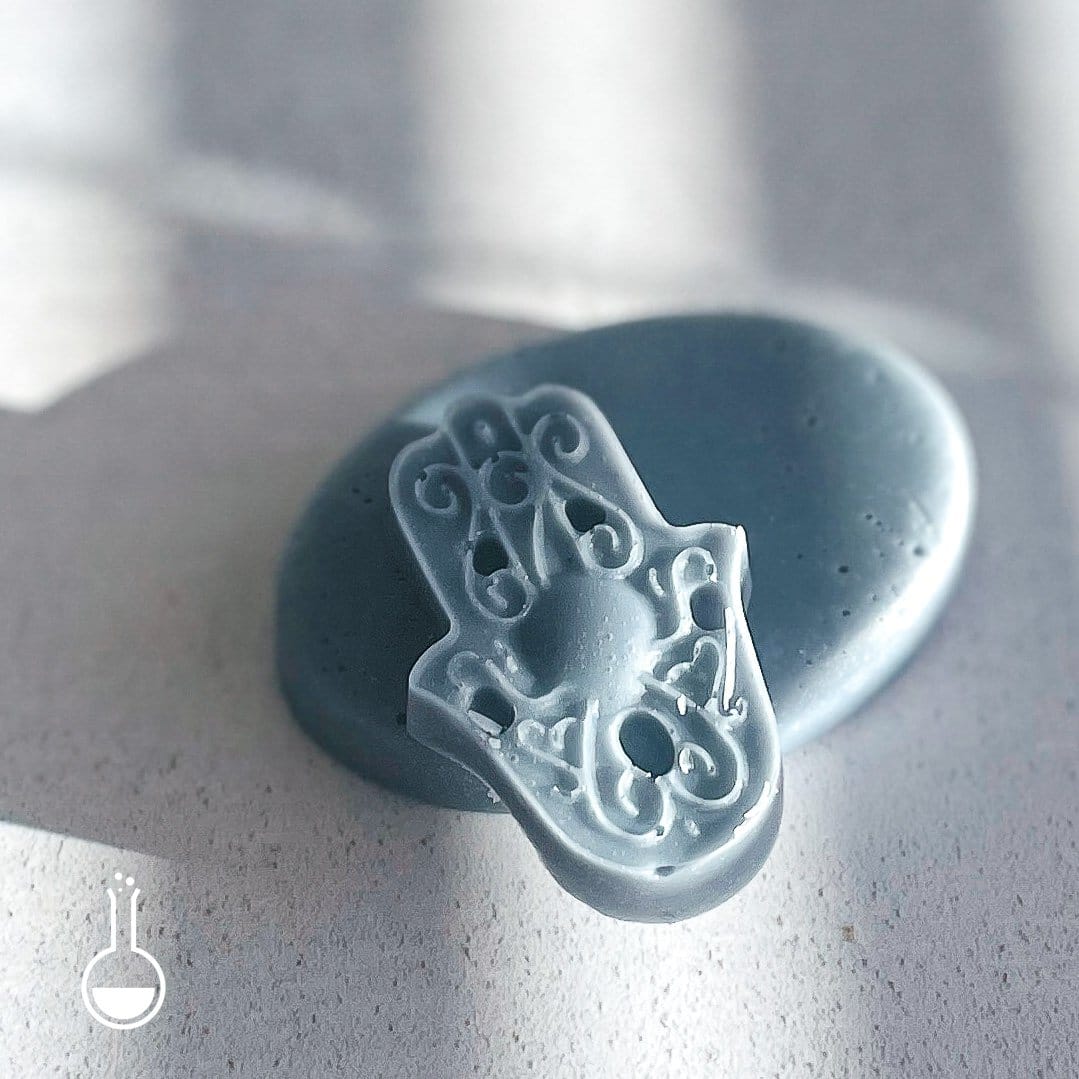
Blue Monday is supposed to be the most miserable day of the year, and whether or not you believe the science behind it, January does have a way of feeling a bit flat. This blue facial cleansing bar is a solid cleanser made with Serbian blue clay and a blend of essential oils anchored by blue yarrow. It's a quick, satisfying project that gives you something genuinely useful at the end of it, and the colour is rather lovely.
This project teaches you how to work with SCI powder in a melt-and-press method, how to incorporate clays and emollient oils into a solid surfactant base, and how to build a simple essential oil blend for a rinse-off product.
The ingredient list is short, there's no water phase to worry about, and the method is forgiving enough that you can focus on understanding what each component does rather than managing a complicated process. If you've never worked with SCI before, this is a good entry point.
HOW TO USE
Use on wet or damp skin. Swirl the bar in your hands to build a lather, then massage gently over your face. Rinse well with water and follow with your usual toner and moisturiser.
ABOUT THE INGREDIENTS
Here's what you'll need and what each ingredient does in this formula:
SCI powder (sodium cocoyl isethionate): The primary surfactant. SCI is a mild anionic cleanser that produces a creamy, dense lather. In a solid bar like this, it's the main cleansing agent, and the powder form is what allows you to use a melt-and-press method rather than a liquid process.
Cetearyl alcohol: The structural base of the bar. This is a fatty alcohol, not a drying alcohol, and it gives the bar its solid form, smooth feel, and clean demould. It melts and binds with the SCI powder during heating.
Apricot oil: A light, skin-compatible emollient. It absorbs well and helps condition the skin during cleansing, reducing the stripping effect of the surfactant.
Jojoba oil: Technically a liquid wax ester rather than a true oil. It's very compatible with the skin's own sebum and adds a smooth, non-greasy conditioning feel to the bar.
Shea butter: An occlusive emollient that adds richness to the bar and supports skin conditioning. At 5%, it contributes to the afterfeel without making the bar too heavy for facial use.
Glycerin: A humectant that draws moisture to the skin. It helps prevent that tight, dry feeling some solid cleansers can leave behind, and it also improves the bar's texture slightly during pressing.
TEGOSOFT® PC 31 (Polyglyceryl-3 Caprate): A refatting agent. It deposits a conditioning film on the skin during rinsing, which improves the feel of the bar and makes it less drying. If you can't source this, Lamesoft PO65 is a good alternative.
Serbian blue clay: A naturally blue clay that gives the bar its colour and contributes gentle absorbent properties. It's similar in behaviour to French green clay but with a distinctive blue-grey tone.
Tocopherol (vitamin E): An antioxidant that protects the oils and butter in the formula from oxidation. At 1%, it helps keep the bar stable over time.
Lavender essential oil: Part of the fragrance blend. Lavender adds a calming, herbaceous base note.
Pink grapefruit essential oil: A bright, citrus top note that lifts the blend and balances the heavier base oils.
Blue yarrow essential oil: A deep blue oil (thanks to its chamazulene content) that contributes both colour and a soft, herbal note. It's similar in profile to German chamomile. This is what gives the bar its blue character.
Cedarwood essential oil: A woody, grounding note that rounds out the blend and adds warmth.
What you'll need:
A digital scale (accurate to 0.01g), a milk pan or double boiler, a heat-resistant beaker or jug, a spatula or spoon for stirring, silicone moulds (any shape you like), pH strips or a pH meter, gloves, and safety goggles. A fine-mesh sieve is useful for sieving the SCI powder before use to reduce lumps.
POSSIBLE SOURCES
This is where I purchased my key ingredients:
SCI powder - INCI: Sodium Cocoyl Isethionate
Tegosoft PC31 - INCI: Polyglyceryl-3 Caprate
Check your usual suppliers for the remaining ingredients. Cetearyl alcohol, apricot oil, jojoba oil, shea butter, glycerin, and tocopherol are all widely available from cosmetic ingredient suppliers. Serbian blue clay and blue yarrow essential oil may require a more specialist supplier.
THE FORMULA
| Phase | Ingredient | Function | %w/w |
|---|---|---|---|
| A | SCI powder (surfactant) | Surfactant | 25.0 |
| A | Cetearyl alcohol | Structural | 25.0 |
| A | Apricot oil | Emollient | 15.0 |
| A | Jojoba oil | Emollient | 15.0 |
| A | Shea butter | Emollient | 5.0 |
| A | Glycerin | Humectant | 5.0 |
| A | TEGOSOFT® PC 31 – Polyglyceryl-3 Caprate (superfatting) | Refatting agent | 6.4 |
| A | Serbian blue clay | Clay / absorbent | 2.0 |
| B | Tocopherol | Antioxidant | 1.0 |
| B | Lavender essential oil | Fragrance | 0.20 |
| B | Pink grapefruit essential oil | Fragrance | 0.20 |
| B | Blue yarrow essential oil | Fragrance | 0.10 |
| B | Cedarwood essential oil | Fragrance | 0.10 |
Method
1. Blend Phase A ingredients and heat till liquid (around 75–80°C).
2. When molten, remove from heat and stir until it is around 70°C.
3. Add Phase B ingredients one by one and stir very well.
4. While still runny (above 60°C), fill up the mould you choose and leave the bar to set.
WHY THIS I SPERFECT FOR BEGINNERS
A solid cleansing bar might seem like a simple project, but there's a fair bit going on under the surface. Here's what you're actually practising:
Working with SCI powder in a melt-and-press method - SCI is one of the most widely used surfactants in solid bars, and learning how it behaves when heated and combined with fatty alcohols is a skill that transfers directly to shampoo bars, body bars, and other syndet solids. Getting comfortable with the temperature and consistency at each stage is something that only comes from actual formulating.
Incorporating clays into a solid base - Adding clay to a surfactant bar is straightforward, but understanding how much to use and how it affects the finished product's feel is useful knowledge. Too much clay can make a bar feel drying, so the 2% here is a good starting point for facial use.
Building a simple essential oil blend - This formula uses four oils at low percentages. Learning how to balance top, middle, and base notes in a rinse-off product is a different exercise from blending for a leave-on, because the scent needs to come through quickly during a short contact time.
Understanding emollient balance in a facial cleanser - This bar has a high oil and butter content relative to the surfactant level. That's deliberate, because a facial cleanser needs to feel gentle and conditioning, and the emollients work alongside the refatting agent to counterbalance the surfactant's cleansing action.
Checking the pH of a solid product - As with any solid cleanser, you'll want to check the pH using a 10% solution (1g of bar dissolved in 9g of distilled water). Practising this method in a simple formula builds the habit for more complex systems later.
MAKE IT YOUR OWN
The oil blend is the most obvious place to start experimenting:
Apricot oil or jojoba oil → sweet almond oil, avocado oil, or hemp seed oil - All are skin-friendly emollients that work well in solid bars. Hemp seed oil is lighter and absorbs quickly, whilst avocado oil is richer and suits drier skin. Keep the total oil percentage the same.
Shea butter → mango butter or cocoa butter - Mango butter has a drier feel than shea, while cocoa butter is firmer and gives the bar more rigidity, so it's a good option if you find the base formula a bit soft.
TEGOSOFT® PC 31 → Lamesoft PO65 - Lamesoft PO65 (INCI: Coco-Glucoside and Glyceryl Oleate) is a widely available plant-derived refatting agent that works well in solid bars. It's generally easier to source than Tegosoft PC31 and gives a similar conditioning afterfeel.
Serbian blue clay → French green clay, kaolin, or pink clay - Each clay has a slightly different colour and absorbency. Kaolin is the mildest and works well for sensitive skin. French green clay is more absorbent and better suited to oilier skin types. Pink clay sits somewhere in between and gives a softer colour.
Essential oil blend — This is a personal preference. Swap in any combination you enjoy, as long as you check the IFRA guidelines for safe usage levels in rinse-off products and keep the total essential oil percentage around 0.60%. If you're not sure which oils work well together or how to build a blend for a rinse-off product, Fiona, our AI Lab Assistant, can help you work that out.
And if you've got a formulation question that needs a quick answer or a second opinion while you're working through any of these swaps, the Smart Formulator Hub is there for exactly that.
Safety Note
This formula is designed for personal use as a rinse-off facial cleanser. It's best suited for normal, combination, or oily skin types. If you have very dry or sensitive skin, you may want to reduce the clay content or patch test carefully before using it regularly.
If you're using essential oils, check the IFRA guidelines for maximum safe usage levels in rinse-off products and be aware of any known sensitisers in your chosen oils. Blue yarrow contains chamazulene, which is generally well tolerated, but always verify with your specific supplier's documentation.
Always perform a patch test before using a new formulation on your face. Apply a small amount of lather to the inside of your wrist, leave for 24 hours, and check for any irritation.
When sourcing your ingredients, make sure you're purchasing from reputable suppliers who provide proper documentation, including Certificates of Analysis (COAs) and Safety Data Sheets (SDS). If you're using any fragrance materials, request the IFRA certificate.
This blog post is for educational purposes only and is not intended to replace cosmetic safety assessments required for commercial sales. If you plan to sell products, a formal safety assessment by a qualified assessor is a legal requirement in the UK and EU.
The blue yarrow is what makes this one a bit special. It's not an ingredient you see in every solid bar, and that deep blue colour it gives the finished product is hard to get any other way without synthetic dyes. Worth seeking out, even if it's not the cheapest oil on the shelf.
Join our free SKOOL Community and let me know if you have used blue yarrow or Serbian blue clay before. I'm curious about your experience with natural blues in formulations.
Join our free SKOOL Community for more resources!
YOU MIGHT ALSO LIKE


About Formulator Hub
Learn to formulate cosmetics from the ground up. Understand your ingredients, build formulas that hold together, and know what to do when something doesn't behave.


Inspiration in your Inbox!

Free Signup
© 2026. All Rights Reserved