

Formulate a Maracuja Conditioner Bar for Healthy Hair Days
ABOUT THE FORMULA
If you've been making shampoo bars, you already know they need a partner. A good conditioner bar closes the cuticle, reduces frizz, and adds the kind of slip that makes hair feel manageable again after cleansing.
This formula pairs maracuja oil with a dry-feel emollient for a finish that conditions without weighing hair down, and the scent blend is warm, citrusy, and a bit unexpected.
The main point of this project is to show you how Emulsense, a cationic emulsifier, behaves differently from the popular BTMS. The pH requirements are lower than most formulators expect, the base adjustment is fussier, and in my opinion, the scent of the raw material is strong enough that you'll need to plan your essential oil blend around it. If you've only used BTMS in conditioner bars, this is a good way to widen your range without a complicated formula.
The method itself is simple, and the ingredient list is short. The challenge here isn't the formulation process as such, but the pH testing and adjustment, which means you can focus on building that habit without juggling a difficult process at the same time.
HOW TO USE
Use on wet, cleansed hair. Hold the bar in your hand and smooth it along your hair from mid-length to ends. Leave it to work for a few minutes before rinsing off thoroughly.
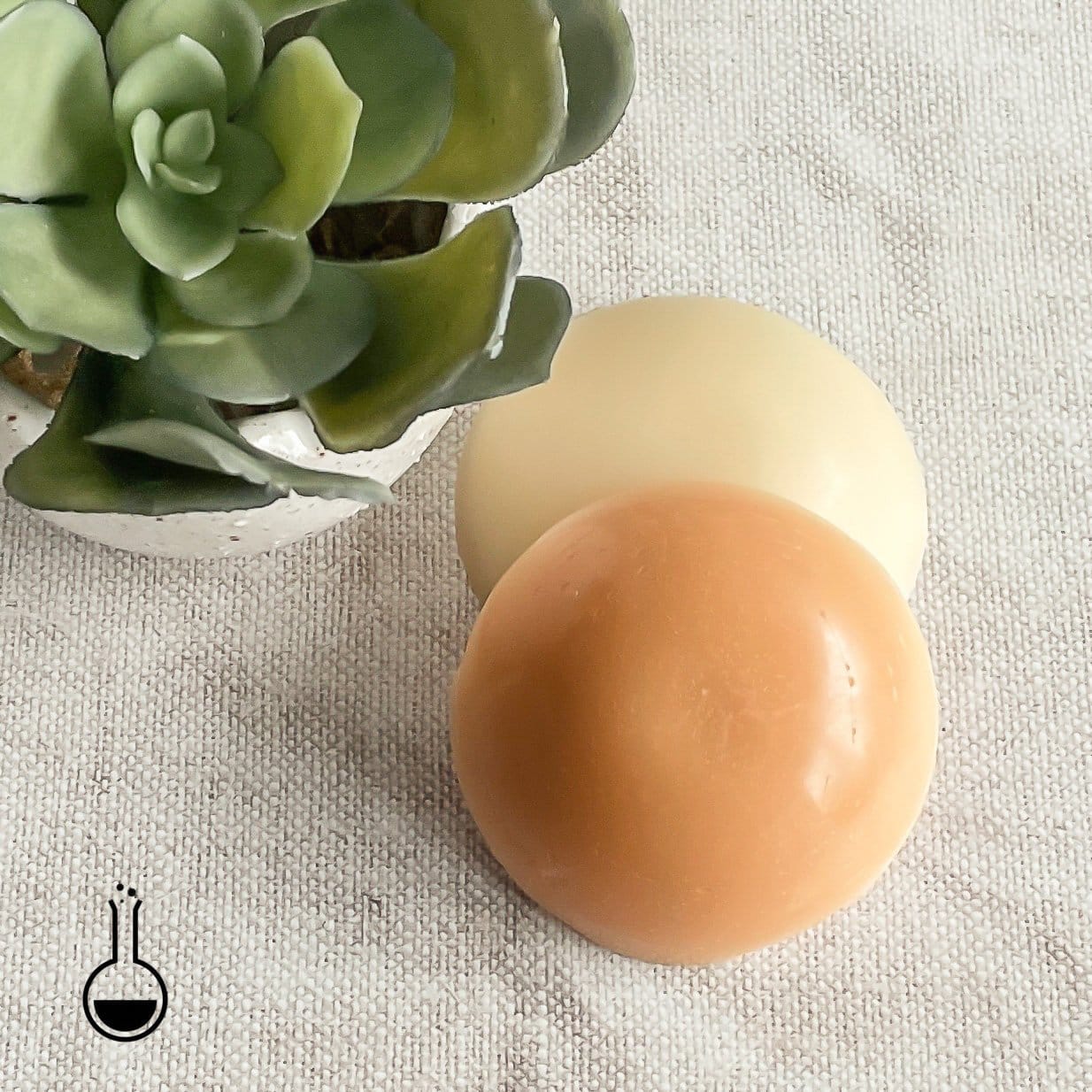
ABOUT THE INGREDIENTS
Here's what you'll need and what each ingredient does in this formula:
Xyliance (Cetearyl wheat straw glycosides and cetearyl alcohol): A non-ionic emulsifier derived from wheat straw. In this bar, it provides structure and helps the solid form hold together. It also aids in rinse-off, which is important for a conditioner that needs to leave hair clean rather than coated.
Emulsense HC (Brassicyl Isoleucinate Esylate and Brassica Alcohol): Our cationic surfactant. This is what actually conditions the hair by depositing on the negatively charged hair surface, closing the cuticle, reducing frizz, and improving combability. It works at a lower pH than BTMS, which changes how you build the rest of the formula around it.
Passionfruit seed oil (Maracuja): A lightweight emollient rich in linoleic acid. It absorbs well without leaving a heavy residue, making it a good choice for a conditioner bar where you want moisturising benefits without weighing the hair down.
Dicaprylyl carbonate: A dry-feel emollient that gives a silky, velvety skin and hair feel. It balances the richness of the maracuja oil and keeps the finished bar from feeling greasy on application.
Glycerine: A humectant that draws moisture to the hair shaft. At 1%, it's a supporting player here, helping with hydration without making the bar sticky or difficult to work with.
Panthenol (pro-vitamin B5): A conditioning agent that penetrates the hair shaft and improves moisture retention. It also adds body and can help reduce the appearance of split ends over time.
Arginine: The pH modifier for this formula. Emulsense HC requires a lower pH than most cationic systems, and arginine is used here because Emulsense doesn't respond well to other common bases. You're aiming for a final pH of 3.8 to 4.5.
Tocopherol (vitamin E): An antioxidant that protects the oils in the formula from going rancid. At 0.5%, it's doing the necessary work to keep the bar stable over its shelf life.
Pink grapefruit essential oil: The top note in the scent blend. It's fresh, citrusy, and cuts through the naturally strong scent of Emulsense HC, which can be noticeable on its own.
Ylang ylang essential oil: A floral middle note that adds depth to the blend. It softens the sharpness of the grapefruit and helps the scent feel more rounded.
Black pepper essential oil: A warm, spicy base note. It's unexpected in a hair product, but at 0.2%, it adds an interesting dry warmth to the fragrance without being overpowering.
What you'll need:
A digital scale (accurate to 0.01g), a heat-resistant beaker or milk pan for melting, a spatula or spoon for stirring, silicone moulds (any shape you like), pH strips or a pH meter, distilled or deionised water (for pH testing), gloves, and safety goggles.
POSSIBLE SOURCES
This is where I purchased my key ingredients:
Emulsense HC — INCI: Brassicyl Isoleucinate Esylate (and) Brassica Alcohol
Dicaprylyl carbonate — INCI: Dicaprylyl carbonate
Xyliance — INCI: Cetearyl wheat straw glycosides and cetearyl alcohol
Check your usual suppliers for the remaining ingredients. Passionfruit seed oil, glycerine, panthenol, arginine, and tocopherol are all widely available. Emulsense HC is a more specialist ingredient, so you may need to look beyond your regular supplier for it.
THE FORMULA
| Phase | Ingredient | Function | % w/w |
|---|---|---|---|
| A | Xyliance | Emulsifier O/W | 50.0 |
| A | Emulsense HC™ | Cationic emulsifier | 35.0 |
| A | Passionfruit seed oil (Maracuja) | Emollient | 6.3 |
| A | Dicaprylyl carbonate | Emollient; dry feel | 5.0 |
| B | Glycerine | Humectant | 1.0 |
| B | Panthenol | Humectant / conditioning | 1.0 |
| B | Arginine | pH modifier | 0.2 |
| C | Tocopherol | Antioxidant | 0.5 |
| C | Pink grapefruit essential oil | Fragrance | 0.6 |
| C | Ylang ylang essential oil | Fragrance | 0.2 |
| C | Black pepper essential oil | Fragrance | 0.2 |
Method
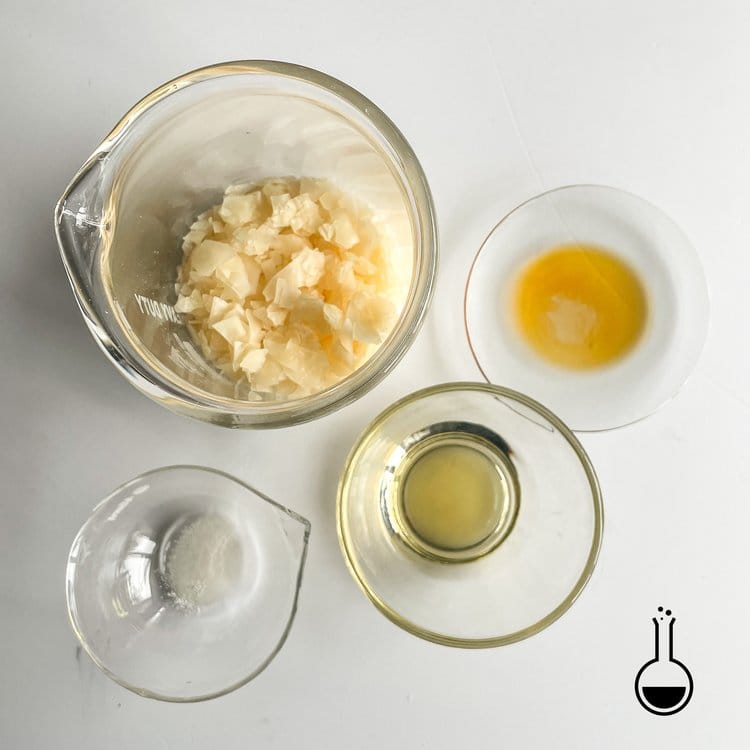
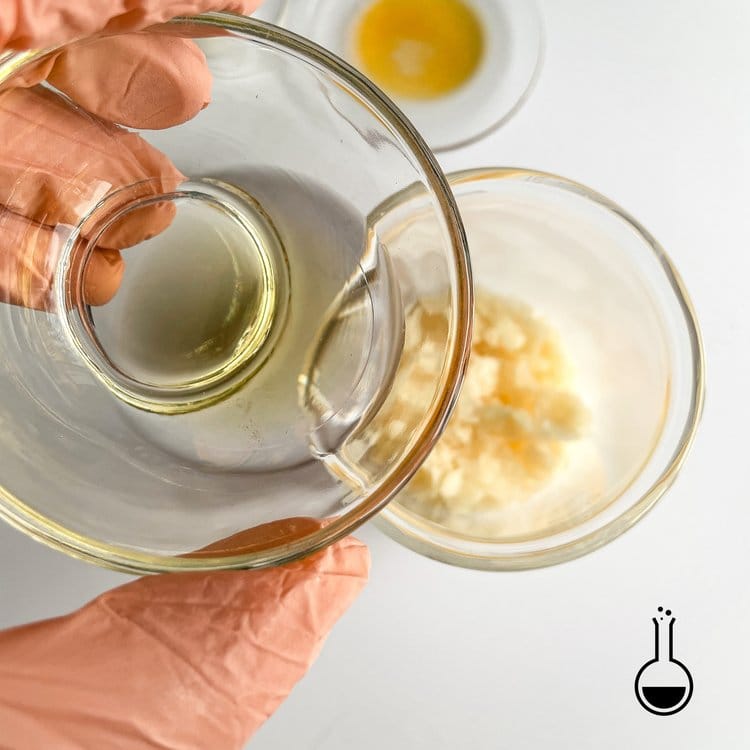
1. Blend Phase A ingredients and heat till liquid (around 75°C).
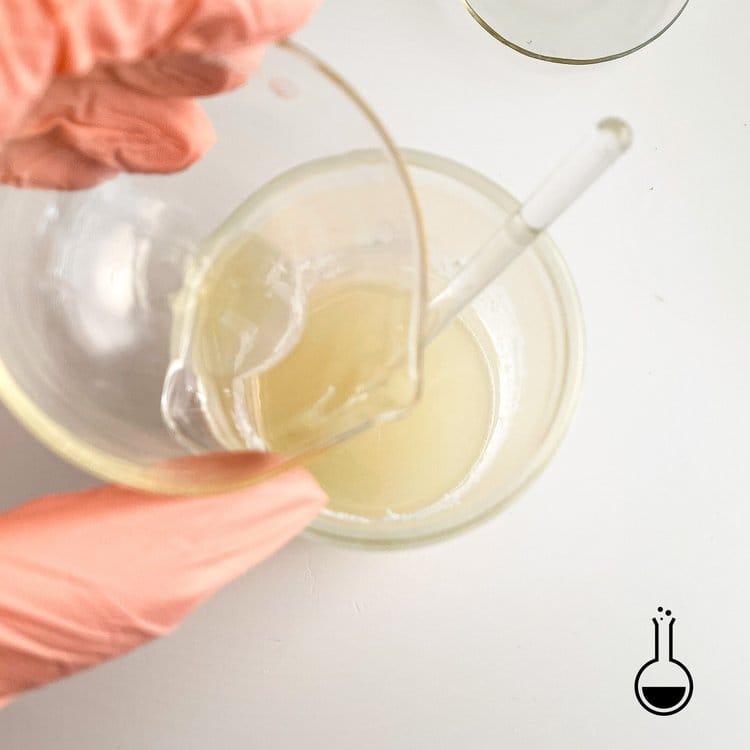
2. When molten, remove from heat and add Phase B. Stir well.
3. Add Phase C and stir well.
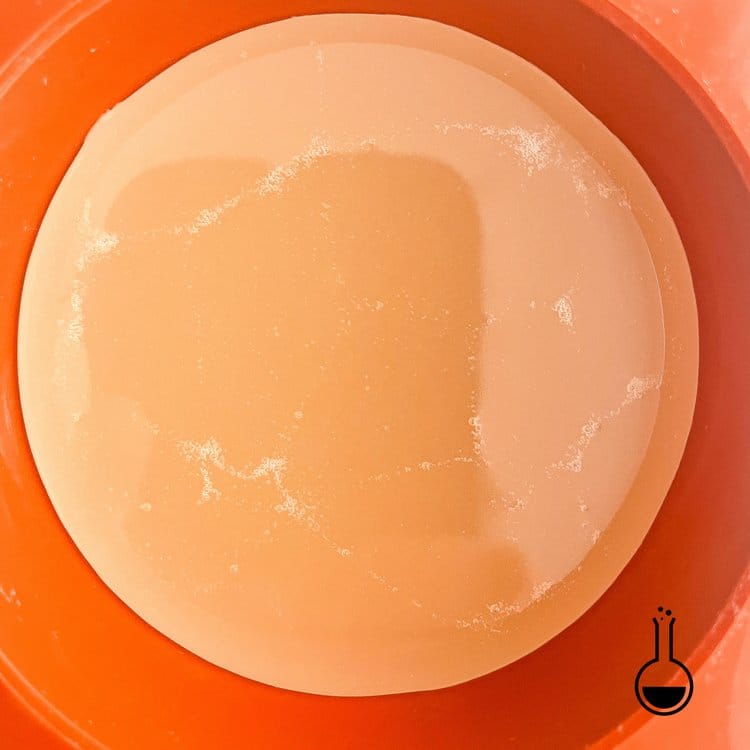
4. While still runny, fill up the mould of your choice and leave the bar to set.
5. Once the bar has fully set, check the pH. Prepare a 10% dilution by dissolving 1g of bar flakes in 9g of distilled water, then test with pH strips or a meter. I tend to use the remainder in the beaker, so I don't need to destroy my bar. You're aiming for pH 3.8 to 4.5. My bar came out at 4.32, so no adjustment was needed. If yours falls outside that range, increase or decrease the arginine on your next batch. The first batch is always a test run with this emulsifier.
WHY THIS FORMULA IS WORTH MAKING
Most conditioner bar recipes online use BTMS and stop there, which is fine, but it means a lot of formulators only know how to build a conditioner around one ingredient. This project puts you through a different set of decisions:
pH management at a lower range: The target here is 3.8 to 4.5, which is lower than most hair products. You won't know whether your formula hits that range until you test the finished bar. If it doesn't, you adjust the arginine and make another batch. That cycle of test, adjust, retest is one of the most useful habits you can build as a formulator.
Choosing emollients for hair rather than skin: The oils and emollients in a conditioner bar need to condition without weighing hair down or leaving it feeling coated. Learning to think about emollient weight and finish specifically for hair products is a different exercise from formulating a body butter or a lotion.
Scenting around a strong base ingredient: Some raw materials have their own distinctive smell, and the essential oil blend needs to work with that rather than pretend it isn't there. That's a practical consideration that comes up more often than you'd expect, and it's worth practising with a simple blend like this one.
Using an alternative cationic emulsifier: If you've only ever used BTMS, working with a different cationic system gives you a better understanding of how conditioning actually works at the ingredient level. It also means you have options when BTMS isn't available or isn't right for what you're trying to achieve.
MAKE IT YOUR OWN
If you want to change the feel of this bar, the emollient pairing is the place to start:
Maracuja oil → argan oil, camellia oil, or broccoli seed oil: Argan is richer and suits thicker, coarser hair. Camellia is lightweight and absorbs beautifully, making it a good option for fine hair. Broccoli seed oil gives a natural silicone-like slip on the hair, which works well for frizz-prone types. Keep the percentage the same.
Dicaprylyl carbonate → C12-15 alkyl benzoate or isopropyl myristate: Both are dry-feel emollients that work well in hair products. Isopropyl myristate is slightly heavier, so it suits drier hair types. Keep the balance with the primary oil in mind, because the dry-feel emollient is what stops the bar from feeling greasy.
Essential oil blend: The scent is a matter of personal preference, but the base material has a strong scent of its own, so you'll need oils that can hold their own alongside it. Citrus top notes tend to cut through well, but being top notes, they "evaporate" fast. If you want help building an alternative blend or checking safe usage levels for rinse-off products, Fiona, our AI Lab Assistant, can walk you through it.
Once you understand how the emollient balance and pH requirements work together in this formula, you can start adapting it for different hair types and conditioning needs. That flexibility is what comes from working through it properly the first time.
Safety Note
This formula is designed for personal use as a rinse-off hair conditioner. It is not a leave-in product and should be rinsed thoroughly after use.
If you're using essential oils, check the IFRA guidelines for maximum safe usage levels in rinse-off products. Pink grapefruit oil is phototoxic in leave-on products but is generally considered safe in rinse-off formulations at these levels. Always verify with your supplier's documentation.
Always perform a patch test before using a new formulation. Apply a small amount to the inside of your wrist or behind your ear, leave for 24 hours, and check for any irritation.
When sourcing your ingredients, make sure you're purchasing from reputable suppliers who provide Certificates of Analysis (COAs) and Safety Data Sheets (SDS). For essential oils, request the IFRA certificate.
This blog post is for educational purposes only and is not intended to replace cosmetic safety assessments required for commercial sales. If you plan to sell products, a formal safety assessment by a qualified assessor is a legal requirement in the UK and EU.
The pH testing is the part of this project that catches people out, because we normally adjust pH at the end. With solid bars, we cannot do that, so pH adjustment needs to be built into the formula itself. Your first bar will probably come out fine in terms of texture and feel, but the pH might not land where it needs to be. That's normal. Note what you get, adjust the arginine on your next batch, and test again. The bar gets better, and so does your instinct for how pH behaves in solid formats.
If you've worked with BTMS before and are trying a different cationic emulsifier for the first time, I'd be curious to hear how you find the comparison. Join our SKOOL Community, and let me know in the comments what your pH came out at and whether you needed to adjust.
Join our free SKOOL Community for more resources!
YOU MIGHT ALSO LIKE


About Formulator Hub
Learn to formulate cosmetics from the ground up. Understand your ingredients, build formulas that hold together, and know what to do when something doesn't behave.


Inspiration in your Inbox!

Free Signup
© 2026. All Rights Reserved