

Formulate a shampoo bar for dry hair
ABOUT THE FORMULA
This one came by popular request, and I'm glad it did because it's a really satisfying bar to make.
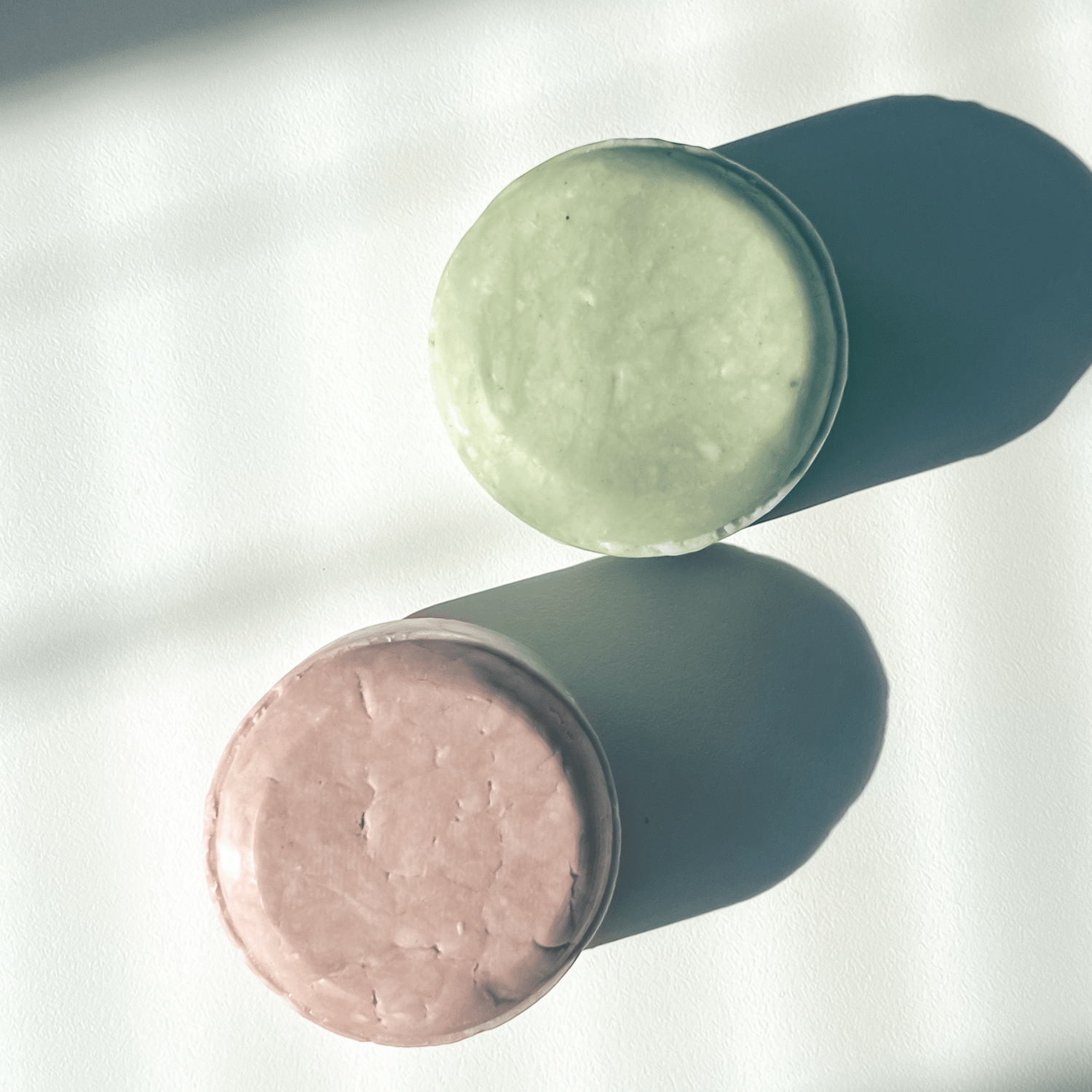
It's a shampoo bar for dry hair, built around SCI and SLSA, two powdered surfactants that give you a rich, creamy lather without stripping the life out of your hair.
We're using the melt-and-press method here, so you'll heat everything in a water bath, combine your phases, and press the mixture into a bar. It's hands-on, a bit messy, and honestly quite fun once you get the feel for the dough.
I've built this formula with dry hair specifically in mind. There's argan oil for conditioning, a refatting agent (Lamesoft PO65) to soften the cleansing action, and cationic guar gum, which is a natural conditioning polymer that leaves the hair feeling noticeably softer after rinsing. It's a short ingredient list, but nothing here is filler. Every ingredient has a job.
In terms of what you'll learn, this project covers how to work with powdered surfactants using a melt-and-press approach, how to balance cleansing with conditioning in a solid format, and how to use a cationic conditioning agent properly (since it's easy to overdo). These are skills that carry straight across into conditioner bars, other shampoo bars, and solid haircare in general.
HOW TO USE
Apply directly to wet hair, or swirl it around your hands and work up a lather. Massage into the scalp and hair, then rinse and condition as usual.
ABOUT THE INGREDIENTS
Here's what you'll need and what each ingredient does in this formula:
Cetyl alcohol: A fatty alcohol that provides structure to the bar and helps bind the powdered surfactants together. It also adds a smooth, conditioning feel to the lather.
SCI powder (Sodium Cocoyl Isethionate) is the primary surfactant. SCI is mild, produces a rich lather, and is well-suited to dry or sensitive hair. It makes up the bulk of this formula.
Argan oil is an emollient that conditions the hair during cleansing. You can substitute coconut or avocado oil if you prefer, though each will give a slightly different feel.
SLSA (Sodium Lauryl Sulfoacetate): A co-surfactant that boosts foam volume and improves the overall lather quality. It works well alongside SCI to create a balanced cleansing experience.
Glycerin is a humectant that draws moisture to the hair and helps the bar feel less drying during use.
Cationic guar gum, a natural conditioning agent (Guar Hydroxypropyltrimonium Chloride), deposits onto the hair and leaves it feeling soft and detangled after rinsing. A little goes a long way, and too much can leave the bar feeling sticky.
Cocamidopropyl betaine is an amphoteric surfactant that improves mildness and foam stability. It also helps with the overall feel of the lather.
Lamesoft PO65: A refatting agent (Coco-Glucoside and Glyceryl Oleate) that reduces the stripping effect of the surfactants, keeping the hair soft and hydrated without compromising the cleansing action.
Essential oil of your choice for scent. Keep to around 1% and check IFRA guidelines for safe usage levels in rinse-off products.
Tocopherol Vitamin E. An antioxidant that helps protect the argan oil from oxidation and extends the shelf life of the bar.
Spirulina (optional) adds a natural green colour and has some beneficial properties, but plant-derived colours like spirulina can fade or change over time. If you want a more stable colour, pink clay, yellow clay, or kaolin is a better option for a longer shelf life.
What you'll need:
A digital scale (accurate to 0.1g), a heat-resistant beaker or pan for a water bath, a second beaker for mixing, a bar press or mould (or you can shape by hand), pH strips or a pH meter, a dust mask (essential when working with powdered surfactants), gloves, and safety goggles.
POSSIBLE SOURCES
This is where I purchased my key ingredients:
Lamesoft PO65: INCI: Coco-Glucoside, Glyceryl Oleate
Cationic guar gum: INCI: Guar Hydroxypropyltrimonium Chloride
Check your usual suppliers for the remaining ingredients. SCI powder, SLSA, cetyl alcohol, and cocamidopropyl betaine are widely available from cosmetic ingredient suppliers.
THE FORMULA
| Phase | Ingredient | Function | % w/w |
|---|---|---|---|
| A | Cetyl alcohol | Structural | 18.20 |
| A | SCI powder | Surfactant | 50.0 |
| A | Argan oil | Emollient | 3.0 |
| B | SLSA | Surfactant | 15.0 |
| C | Glycerin | Humectant | 4.0 |
| C | Cationic guar | Conditioning agent | 0.30 |
| D | Cocamidopropyl betaine | Amphoteric surfactant | 4.0 |
| E | Lamesoft PO65 | Refatting agent | 4.0 |
| E | Essential oil of your choice | Fragrance | 1.0 |
| E | Tocopherol | Antioxidant | 0.10 |
| E | Spirulina | Botanical (colour) | 0.40 |
Method
Important: Before you start, please make sure you're wearing a suitable dust mask. Powdered surfactants like SCI and SLSA are fine particles that irritate the lungs if inhaled. Gloves and goggles are also recommended.
Phase A
Start heating Phase A in a water bath. Keep stirring and give it time. The mixture should become a smooth, cohesive paste as everything starts melting down.
Phase B
When Phase A starts to soften, add SLSA (Phase B) and stir until combined.
Phase C
Prepare a slurry by mixing the glycerin and cationic guar gum together in a separate container, then add this to the Phase A/B mixture. Stir it in thoroughly.
Phase D
When the mixture is fully melted and smooth, remove it from the heat and allow it to cool a bit. Add Phase D (cocamidopropyl betaine). Stir it in well.
Phase E
Blend in all Phase E ingredients and mix until everything is evenly distributed. The mixture should be an even colour throughout if you're using spirulina.
Shaping
Let the mixture cool to around 40–45°C. Once cool enough to handle, knead it by hand like dough. Use a bar press or mould to shape it, or form it by hand. Allow the shampoo bar to dry for 24–48 hours before use.
Checking the pH
Use the leftover shampoo in the pan or beaker to check the pH. Add 1g of the bar to 9g of distilled water and stir to dissolve. You can now check the pH. The bar should have a pH of around 5–6, which is suitable for both the scalp and the surfactant system. My bar has a pH of 5.14.
If the dough hardens and you can't work it, just place it back in the water bath for a short while to soften it again.
WHY THIS FORMULA IS WORTH MAKING
This project covers more formulation ground than it might seem at first glance. Here's what you're getting from it:
Working with powdered surfactants using the melt-and-press method: You're learning how to melt powdered surfactants in a water bath, combine your phases at the right stages, and press the mixture into a solid bar. Understanding how temperature affects the workability of the dough, when to remove from heat, and how to knead and press a consistent bar gives you a practical foundation for all solid surfactant products.
Balancing cleansing and conditioning: Dry hair needs a formula that cleans without stripping. Understanding how to combine a refatting agent, a conditioning polymer, and an emollient alongside your surfactants is a skill that applies to every haircare formulation you'll make.
Using cationic conditioning agents properly: Cationic guar is a brilliant ingredient, but it's easy to overdo. Working with it at the right percentage and understanding how to disperse it properly (the glycerin slurry technique) teaches you a principle you'll use again in conditioner bars and leave-in treatments.
Understanding surfactant combinations, SCI and SLSA work well together because they complement each other's strengths. SCI gives richness and mildness, SLSA adds volume and foam. Learning to think about surfactant blends rather than relying on a single surfactant is fundamental to formulating good cleansing products.
pH testing a solid product: Testing the pH of a bar requires a different approach than testing a liquid. The dilution method here (1g bar to 9g water) is a practical technique you'll use for any solid formulation.
By the time you've finished this bar, you've practised five distinct formulation skills in a single project. That's a worthwhile afternoon.
MAKE IT YOUR OWN
Once you've made the base version and you're happy with how it turns out, have a play with some variations:
Argan oil → coconut oil or avocado oil: Both work well as emollients in shampoo bars. Coconut oil has a natural affinity for hair protein, so it can feel more conditioning. Avocado oil is heavier and suits very dry or coarse hair.
Cationic guar → BTMS (with a note): BTMS is popular in shampoo bars, but I don't recommend it, and I don't teach it for this application. I haven't found a study that satisfies me on its suitability in a rinse-off surfactant product. If you choose to use it, keep it below 3%. Cationic guar is my preference here because it's well-suited to the job and behaves predictably.
Spirulina → pink clay, yellow clay, or kaolin: If you want colour that lasts, mineral-based options are more stable than plant-derived pigments. Spirulina initially gives a lovely green, but it will fade or shift over time, especially with exposure to light.
Essential oil swaps: Rosemary, cedarwood, and peppermint all work well in haircare bars. Check the IFRA guidelines for maximum safe use in rinse-off products, and be aware of any known sensitisers.
The structure of this formula is quite forgiving once you understand what each ingredient does. Understanding the roles means you can adapt confidently rather than guessing.
SAFETY NOTE
This formula is designed for personal use as a rinse-off shampoo bar. It's not intended for use on broken or irritated skin.
Powdered surfactants, such as SCI and SLSA, are fine powders that can irritate the lungs and eyes. Always wear a dust mask, gloves, and safety goggles when handling them. Work in a well-ventilated area.
If you're using essential oils, check the IFRA guidelines for maximum safe usage levels in rinse-off products and be aware of any known sensitisers (linalool, limonene, eugenol, etc.).
Always perform a patch test before using a new formulation, especially if you have a sensitive scalp or reactive skin. Apply a small amount of lather to the inside of your wrist, leave for 24 hours, and check for any irritation.
When sourcing your ingredients, make sure you purchase from reputable suppliers that provide proper documentation, including Certificates of Analysis (COAs) and Safety Data Sheets (SDS). If you're using fragrance materials, request the IFRA certificate.
This blog post is for educational purposes only and is not intended to replace cosmetic safety assessments required for commercial sales. If you plan to sell products, a formal safety assessment by a qualified assessor is a legal requirement in the UK and EU.
There's something satisfying about making a shampoo bar from scratch, especially one that's designed around your hair's actual needs rather than a generic recipe. This one cleans gently, conditions well, and holds together properly, which is more than most first attempts manage.
If you're making it for yourself, enjoy it. If you're making it for someone else, even better.
Join our free SKOOL Community for more resources!
YOU MIGHT ALSO LIKE


About Formulator Hub
Learn to formulate cosmetics from the ground up. Understand your ingredients, build formulas that hold together, and know what to do when something doesn't behave.


Inspiration in your Inbox!

Free Signup
© 2026. All Rights Reserved