

Formulate his and hers Valentine's day cleansers
ABOUT THE FORMULA
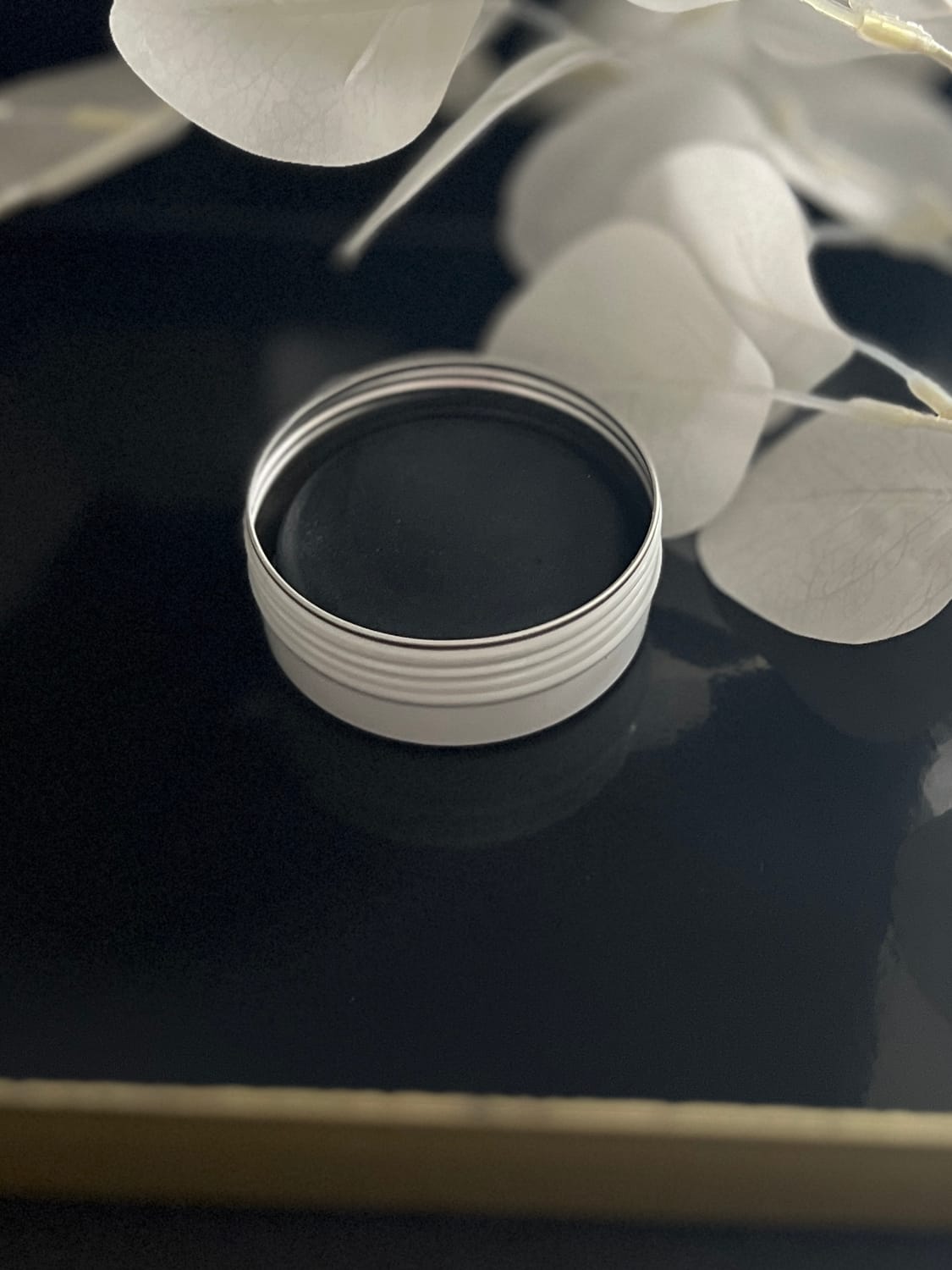
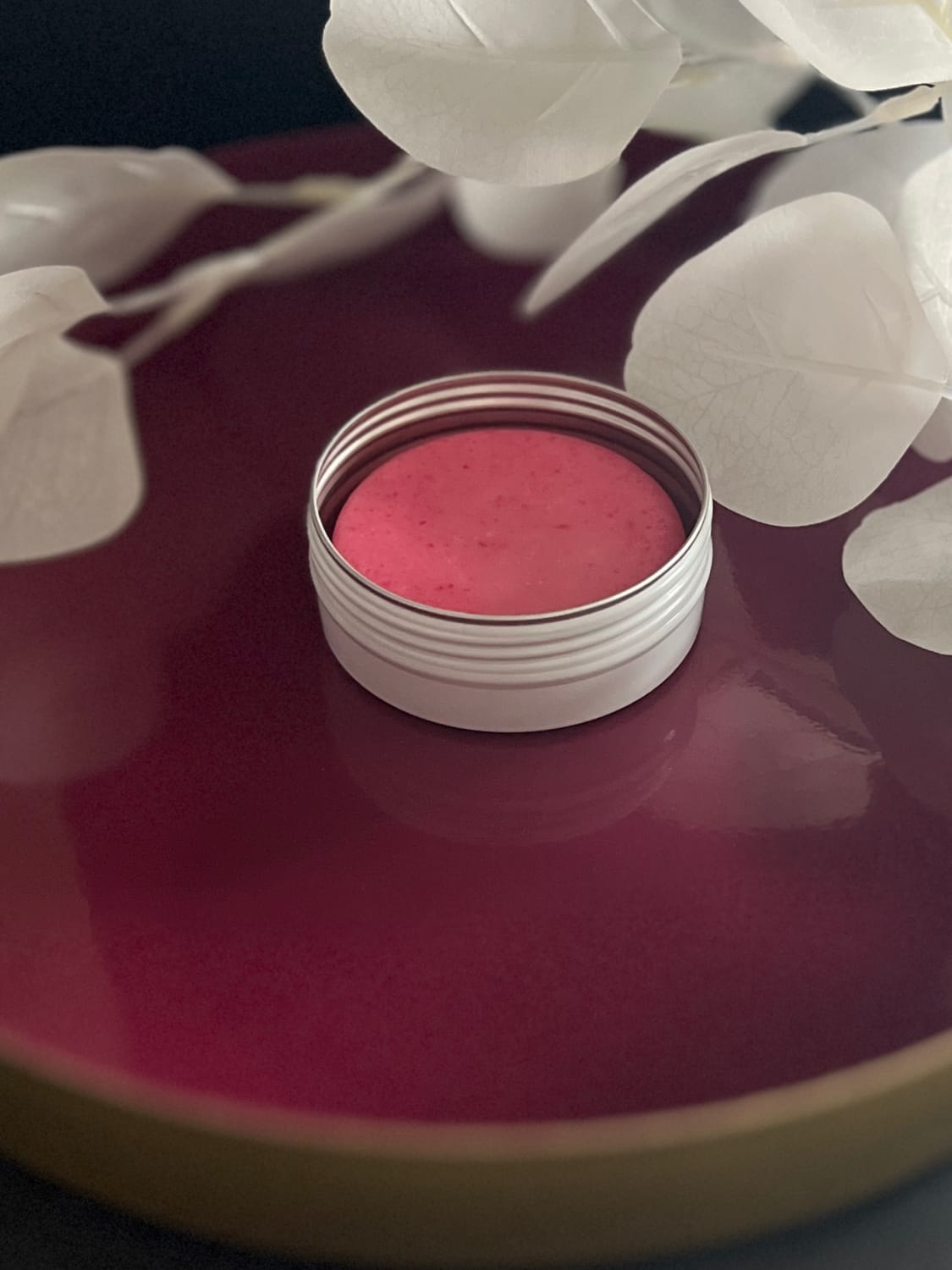
Solid cleansing bars are quick to make, they look lovely, and they’re one of those projects where you end up genuinely pleased with what you’ve made. This his-and-hers set uses the same base formula with different finishing touches, so you make one batch and split it into two distinct bars: one with soft pink mica shimmer and one with activated charcoal.
This project teaches you how to work with anionic surfactant powders in a melt-and-press method, how to balance cleansing power with skin conditioning using superfatting agents and emollients, and how to check the pH of a solid product. These are practical skills that apply well beyond this single formula, especially if you’re interested in shampoo bars, body bars, or any syndet-style solid.
It’s well-suited for beginners because the ingredient list is short, the method is forgiving, and there’s no water phase to preserve. If you’ve never worked with SCI or SLSA before, this is a good place to start because you can focus on getting comfortable with the surfactants without worrying about emulsification or microbial stability.
HOW TO USE
Use in the shower or bath. Swirl the bar in your hands to build a creamy lather, then massage over damp skin. Rinse thoroughly and allow the bar to dry between uses.
ABOUT THE INGREDIENTS
Here’s what you’ll need and what each ingredient does in this formula:
Cetearyl alcohol — the structural base of the bar. It’s a fatty alcohol, not a drying alcohol, and it gives the bar its solid form and smooth, creamy feel. It also makes the bar easier to press and demould cleanly.
SLSA powder (sodium lauryl sulfoacetate) — a mild anionic surfactant derived from coconut. It’s one of the main cleansing agents in this formula and produces a rich, fluffy lather without the irritation potential of harsher sulphates.
SCI powder (sodium cocoyl isethionate) — another mild anionic surfactant that works alongside SLSA. SCI contributes to the creamy, dense quality of the lather and is well tolerated by most skin types. Together with SLSA, it forms the surfactant blend that does the actual cleansing.
Glycerin — a humectant that draws moisture to the skin. At 5%, it helps prevent that tight, stripped feeling that some cleansing products can leave behind.
Lamesoft PO65 — a plant-derived conditioning agent that acts as a superfatting ingredient. It deposits a soft, smooth film on the skin during rinsing, which improves the afterfeel of the bar and makes it feel less drying.
Macadamia oil (for her) / Jojoba oil (for him) — the emollient oils in this formula. Both are skin-compatible and nourishing. Macadamia oil is rich in palmitoleic acid, which closely resembles the skin’s own sebum. Jojoba oil is technically a liquid wax ester and absorbs well without feeling heavy. You can use either oil for both bars if you prefer.
Tocopherol (vitamin E) — an antioxidant that protects the oils in the formula from oxidation. At 2%, it helps keep the bar stable and extends its shelf life.
Essential oil of your choice — for scent. Choose something you enjoy and check that it’s safe for use in rinse-off products at the listed percentage. Timi used Nikura’s ‘Sweet Dreams’ blend for the pink bar and ‘Energy’ for the charcoal bar.
Mica (for her) / Activated charcoal powder (for him) — the colourants. Pink mica gives a soft shimmer; activated charcoal gives a deep, matte finish. Both are used at 0.50%, which is enough for visible colour without affecting the bar’s performance.
What you’ll need:
A digital scale (accurate to 0.01g), a milk pan or double boiler, a heat-resistant beaker or jug, a spatula or spoon for stirring, silicone moulds (any shape you like), pH strips or a pH meter, gloves, and safety goggles. If you have a fine-mesh sieve, it’s useful for sieving the surfactant powders before use to reduce lumps.
POSSIBLE SOURCES
This is where I purchased my key ingredients:
Nikura ‘Energy’ essential oil blend — used for the charcoal bar.
Nikura ‘Sweet Dreams’ essential oil blend — used for the pink bar.
Check your usual suppliers for the remaining ingredients. Cetearyl alcohol, SCI, SLSA, glycerin, Lamesoft PO65, and tocopherol are all widely available from cosmetic ingredient suppliers.
THE FORMULA
| Phase | Ingredient | Function | % w/w |
|---|---|---|---|
| A | Cetyl alcohol | Structural | 18.20 |
| A | SCI powder | Surfactant | 50.0 |
| A | Argan oil | Emollient | 3.0 |
| B | SLSA | Surfactant | 15.0 |
| C | Glycerin | Humectant | 4.0 |
| C | Cationic guar | Conditioning agent | 0.30 |
| D | Cocamidopropyl betaine | Amphoteric surfactant | 4.0 |
| E | Lamesoft PO65 | Refatting agent | 4.0 |
| E | Essential oil of your choice | Fragrance | 1.0 |
| E | Tocopherol | Antioxidant | 0.10 |
| E | Spirulina | Botanical (colour) | 0.40 |
Method:
1. Weigh Phase A in a milk pan (if you have an electric hob) or use a double boiler. Follow the order of ingredients.
2. Start heating Phase A. When almost molten, add in Phase B ingredients.
3. Stir slowly, avoid creating bubbles.
4. Remove from heat and allow to cool slightly.
5. Add Phase C ingredients and pour into your chosen mould.
6. Allow the cleanser to harden overnight before demoulding.
Use the remainder in the pan to check the pH. Create a 10% solution (1g cleanser and 9g distilled water) and check the pH. My charcoal bar has a pH of 4.96.
WHY IS PERFECT FOR BEGINNERS
This formula covers more practical ground than it might look like at first glance. Here’s what you’re learning when you make it:
Working with anionic surfactant powders — SCI and SLSA are the two most commonly used surfactants in solid bars, and learning how they behave when melted and combined is a skill you’ll use again and again in shampoo bars, body bars, and other syndet solids.
Understanding the melt-and-press method — this formula uses a method where the cetearyl alcohol is melted, and the surfactant powders are incorporated into the melt. Getting a feel for the right temperature and consistency at each stage is something that only comes from doing it, and this formula is a forgiving one to practise with.
Balancing cleansing with conditioning — a cleanser that strips the skin isn’t a good cleanser, no matter how well it foams. This formula teaches you how superfatting agents like Lamesoft PO65 and emollient oils work alongside surfactants to leave the skin feeling clean but comfortable.
Checking the pH of a solid product — pH adjustment is a core formulation skill, and solid products require a slightly different approach (the 10% solution method). Practising it here, where the formula is simple, builds the habit before you move on to more complex systems.
Customising a base formula — by making two variations from one base, you’re already practising the principle of adapting a formula to different purposes. That’s the thinking that separates a formulator from someone who follows recipes.
By the time you’ve finished both bars, you’ve covered five foundational skills in a single session. That’s a productive afternoon.
MAKE IT YOUR OWN
Once you’ve made the base version and you’re confident with the method, try some swaps:
Macadamia or jojoba oil → sweet almond oil, avocado oil, or olive oil. They are all skin-friendly emollients that work well in solid bars. Olive oil gives a slightly heavier feel, whilst sweet almond is light and well tolerated. Keep the total oil percentage the same.
SLSA + SCI → adjust the ratio. If you find the lather too fluffy, increase the SCI and reduce the SLSA. SCI produces a creamier, denser foam. If you want more bubbles, alter the balance the other way. The total surfactant percentage should stay around 40%.
Mica or charcoal → other colourants. Cosmetic-grade clays, such as kaolin or French green clay, can replace the colourant and provide gentle cleansing or soothing benefits. Some clays also contribute a natural colour. Soap-safe colourants are another option if you want bolder shades.
Add a conditioning extra. Panthenol (provitamin B5) at 0.5 to 1%, hydrolysed proteins (silk, oat, or rice) at 0.5 to 2%, or colloidal oatmeal at 0.5 to 3% can all be added to Phase B. If you add these, reduce the oil percentage by the same amount to keep the formula balanced.
The principle is the same as always: once you understand the structure, you can adapt the individual ingredients to suit your skin, your preferences, or what you have on hand. If you’re not sure which essential oils to pair or how to build a blend that works for a rinse-off product, Fiona, our AI Lab Assistant, can help you work that out.
SAFETY NOTE
This formula is designed for personal use as a rinse-off body cleanser. It’s best suited to normal or oily skin. If you have sensitive or dry skin, this may not be the right formula for you due to the surfactant concentration, as Timi has noted in the comments on the original post.
If you’re using essential oils, check the IFRA guidelines for maximum safe usage levels in rinse-off products and be aware of any known sensitisers in your chosen blend. The 1.5% essential oil level in this formula is within typical safe ranges for rinse-off use, but always verify with the specific oils you’re using.
Always perform a patch test before using a new formulation on your body. Apply a small amount of lather to the inside of your wrist, leave for 24 hours, and check for any irritation.
When sourcing your ingredients, make sure you purchase from reputable suppliers that provide proper documentation, including Certificates of Analysis (COAs) and Safety Data Sheets (SDS). If you’re using any fragrance materials, request the IFRA certificate.
This blog post is for educational purposes only and is not intended to replace cosmetic safety assessments required for commercial sales. If you plan to sell products, a formal safety assessment by a qualified assessor is a legal requirement in the UK and EU.
These bars come together in an afternoon; they look lovely as a pair, and they make a thoughtful Valentine’s Day gift, especially when you can explain exactly what’s in them and why. Whether both bars end up wrapped for someone else or one quietly stays in your own shower, that’s entirely your call.
Join our free SKOOL Community for more resources!
YOU MIGHT ALSO LIKE


About Formulator Hub
Learn to formulate cosmetics from the ground up. Understand your ingredients, build formulas that hold together, and know what to do when something doesn't behave.


Inspiration in your Inbox!

Free Signup
© 2026. All Rights Reserved